Why Intermittent Fasting Won’t Fix Your Metabolism, Instead Skip Meat and Dairy and Start Exercising

In MedScapes Impact Factor, Dr. F. Perry Wilson from Yale School of Medicine discusses metabolic syndrome, a lifestyle-related condition affecting one-third of American adults, and a study on time-restricted eating as a means of treating it. According to discussion, you have metabolic syndrome if you have three of the following symptoms: elevated waist circumference, elevated fasting triglycerides, elevated blood pressure, low HDL cholesterol, and elevated fasting blood glucose. However, Dr. Perry’s interpretation of a study on time-restricted eating, which yielded underwhelming results, led him to conclude that lifestyle interventions may not be as effective as pharmaceutical treatments in managing metabolic syndrome.

It is essential to recognize that dietary choices play a crucial role in health outcomes. For instance, incorporating a whole-food plant-based diet can lead to significant improvements in health and even reverse lifestyle-induced chronic illnesses. A whole-food plant-based diet abundant in fruits, vegetables, whole grains, legumes, nuts, and seeds is probably the most effective lifestyle intervention, having the potential to bring about significant improvements and even reverse lifestyle-induced chronic illnesses. Dr. Dean Ornish’s Lifestyle Heart Trial, one of the most well-known large-scale studies conducted in the 1980s and 1990s, demonstrated the benefits of a whole-food, plant-based diet in reversing chronic lifestyle diseases. This study managed to not only slow coronary heart disease, which is at the root of metabolic syndrome, but showed a reversal in many patients.

Another study, The Broad Study (British Randomized Controlled Trial of Whole-Food Plant-Based Diet), published in Nutrition & Diabetes in 2017, demonstrated the benefits of a whole-food, plant-based diet on metabolic factors. This study is notable because it was one of the first large-scale trials to highlight the metabolic benefits of a whole-food, plant-based diet, offering significant evidence for its role in improving weight, cholesterol, and glycemic control without the need for calorie restriction.

Exercise, both aerobic and resistance training, works on different pathways to improve metabolic health, namely by improving aerobic capacity and muscle mass. A meta-analysis evaluated 10 randomized controlled trials involving over 1,200 participants. It found that aerobic exercise significantly improved key components of metabolic syndrome, including waist circumference, triglycerides, HDL cholesterol, blood pressure, and fasting glucose. Exercise reduced the incidence of metabolic syndrome by 20-30%. Another meta-analysis worked with a pool of 77,000 patients. Exercise, particularly aerobic exercise, led to improvements in body composition, cardiovascular, and metabolic outcomes in those with metabolic syndrome.

I could have told you that time-restricted eating might lead to minor weight loss because of the tendency to eat fewer calories (like the disappointing time-restricted eating study suggests), but if those calories come from the same foods that gave you metabolic syndrome in the first place (meals loaded with saturated fat like meat and dairy, foods loaded with highly processed oils, and processed carbohydrates like white flour and white sugar), you are simply becoming unhealthy at a slower rate. If you are sitting all day while eating a crappy diet, simply restricting your feeding time a bit is not likely to make a profound change. Selecting an appropriate lifestyle intervention matters.

12 Fun Facts about Red Meat

by Leonardo Garcia © 2021

As evidence rolls in for the health benefits of adopting a whole food plant-based diet (fruits, vegetables, whole grains, legumes, nuts and seeds), the case for dropping animal products (meat, poultry, fish, dairy, and eggs) from our diets becomes compelling. Science continues to tease out the numerous mechanisms as to why the consumption of animal products is unhealthful and disease-promoting. Whether it is from saturated fat, cholesterol, TMAO, heme iron, nitrosamines, hormonal contamination, bacterial contamination, or the way each of these factors interact as a whole with our biology, the public gets mixed information due to roadblocks set up by aggressive marketing, lobbying campaigns, industry funded “science”, and, in some cases, the FDA, much in the way the tobacco industries attempted to cloud the relationship between smoking and lung cancer decades ago. Now, smoking has taken second place to poor diet in the leading cause of disease. Here are some facts about meat consumption to consider before your next meal.

  1. The International Agency for Research on Cancer (IARC) lists the consumption of red and processed meats as carcinogenic.
  2. Red meat contains many harmful compounds in addition to saturated fat that include arachidonic acid (highly inflammatory omega 6 fatty acid), methionine (promotes cancer growth), trans-fatty acids (aka “trans-fats”), endogenous hormones like IGF-1 (promotes tumor growth), exogenous hormonal growth promoters, antibiotics, man-made contaminants (fertilizers, pcbs, pesticides), and formaldehyde, among others.
  3. Red meat contains bovine pathogens such as E. Coli and bovine spongiform encephalopathy which can lead to serious and life-threatening bacterial and viral infections.
  4. Steroid hormones in meat and dairy products are complicit in the risk factors for various cancers in humans.
  5. The digestion of meat raises Trimethylamine N-Oxide (TMAO) levels in blood dramatically. High TMAO blood levels are associated with cardiovascular disease, obesity, Alzheimer’s, and cancer. It is also associated with a dysfunctional microbiota.
  6. Controlled trials by Dr. Dean Ornish at the Preventative Medicine Research Institute led to an inverse relationship between health outcomes and the consumption of animal products (red meat, poultry, fish, eggs, and dairy).
  7. Reversal of coronary heart disease was achieved by eliminating meat, dairy, fish, and oil from patients’ diets during a clinical trial at the Cleveland Clinic by Dr. Caldwell Esselstyn.
  8. In metabolic ward studies, interventional studies, and randomized clinical trials, an increase in saturated fat from dietary sources (meat, dairy, eggs) led to an increase in LDL cholesterol. High LDL levels are a primary indicator of coronary heart disease.
  9. There is a strong correlation between diets high in dietary cholesterol (meat, eggs, dairy) and elevated risks of stomach, colon, rectum, pancreas, lung, breast, testicular, kidney, and bladder cancers.
  10. The water footprint of producing red meat is devastating our environment. It takes approximately 1800 gallons of water to produce 1 pound of beef (roughly 30 gallons/1 g of protein) whereas it takes approximately 500 gallons of water to produce 1 pound of chickpeas (roughly 5 gallons/1g of protein). A pound of potatoes only takes 34 gallons.
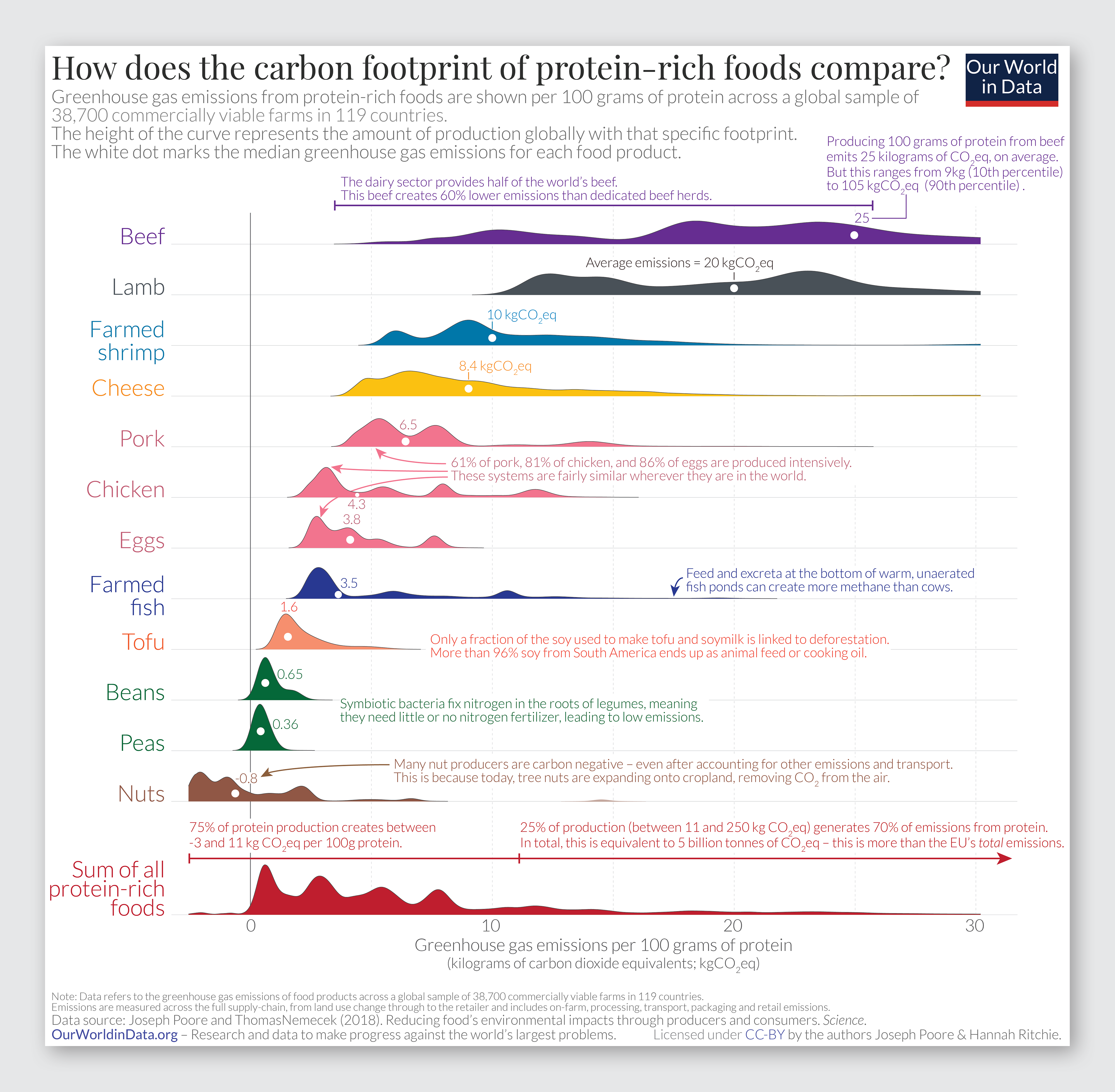
  11. The carbon footprint of beef is 25x more than that of beans and peas combined.
  12. Methane, a greenhouse gas and powerful driver of climate change, emissions from cattle has far more impact on global warming than previously thought.